The Mercy Tradition in Belize: A Short History
The story of the Sisters of Mercy in Belize is one of the more remarkable threads in the history of Catholicism in Central America — a story that begins on a January morning in 1883 and runs, unbroken, through schools, clinics, and houses of hospitality that are still part of Belizean life today.
Arrival by sea, 1883
On the morning of 20 January 1883, a ship called the City of Dallas put in at Belize City, then the capital of the colony of British Honduras. Aboard were a small band of Sisters of Mercy who had travelled from the Motherhouse in New Orleans, Louisiana, at the request of Jesuit missionaries. Four years earlier, in 1879, two of those priests had journeyed north to plead with the Sisters to come and teach the children of the town.
They wasted no time. According to the account maintained by the community's own schools, a small class was opened on the first floor of the convent the day after they landed. That little school grew into St. Catherine Academy, one of the country's most enduring educational institutions. The broader history is summarized in the encyclopedic entry on the history of Roman Catholicism in Belize.
From classroom to community
What began as a single classroom widened over the following century into a network of ministries. In addition to St. Catherine Academy in Belize City, the Sisters became associated with a secondary school in Orange Walk Town and, in time, with a kitchen, a clinic, and a house of hospitality in the country's south. The through-line was consistent: education for the young, care for the poor, and places of welcome for anyone in need.
The name that recurs throughout is Mercy — not as a slogan but as a description of a way of working. The Sisters of Mercy were founded expressly to serve people whom other institutions overlooked, and the Belize foundation carried that intention into a new hemisphere.
A spiritual-life center
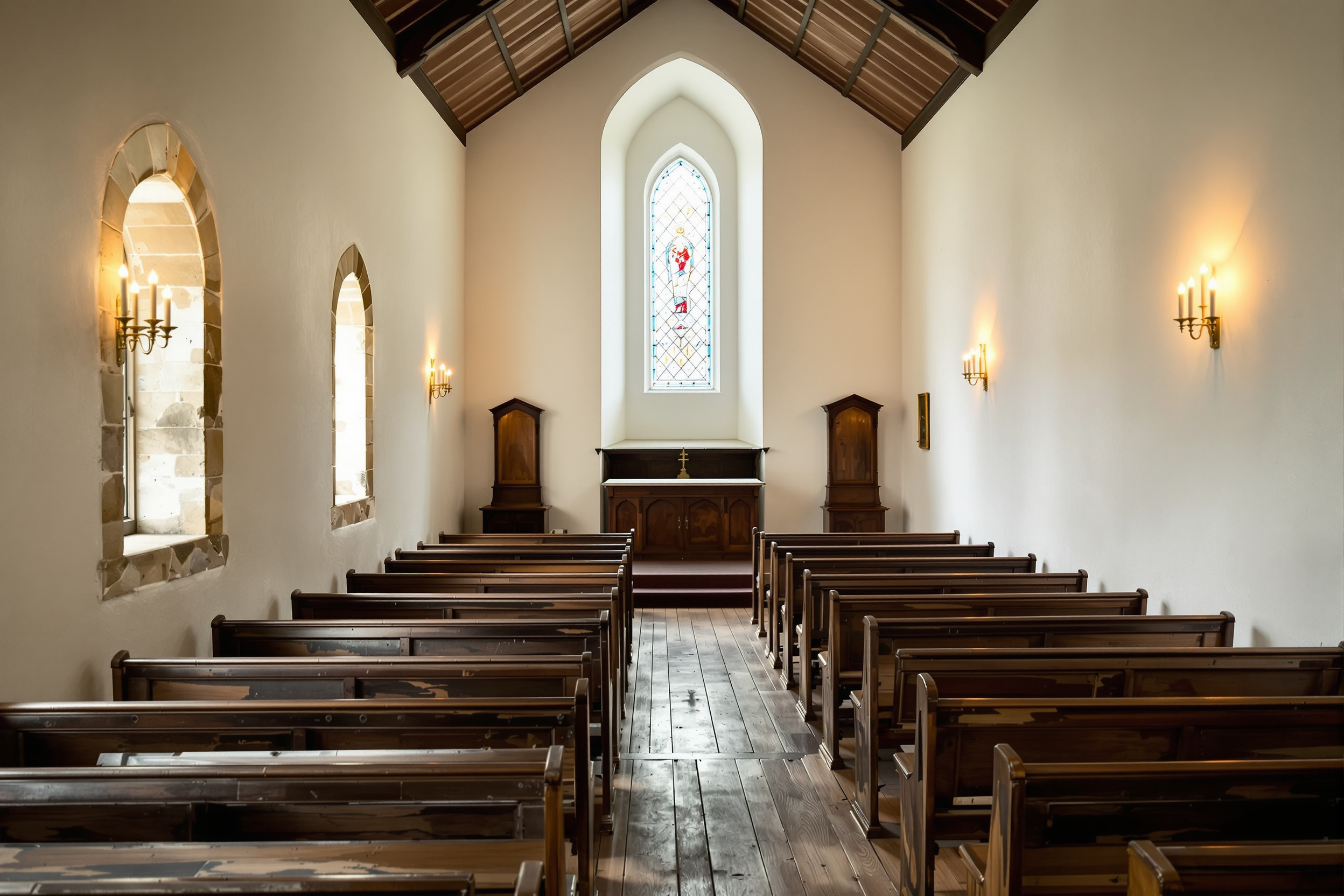
Alongside the schools and social ministries, a quieter work took shape: a spiritual-life center offering retreats, prayer, and spiritual direction. Established in the early 1980s in Belize City, it drew on the same coastal setting that had welcomed the first sisters a century before — a historic chapel, meeting rooms, and simple accommodation kept for reflection and rest. Its purpose was hospitality "in the spirit of Mercy": time and space for prayer, workshops, and personal renewal.
The idea behind such a center is old and widely shared across traditions. A retreat house is not a hotel and not a conference venue; it is a deliberately unhurried place, kept apart so that visitors can attend to what the busyness of ordinary life crowds out. You can read more about that idea in our guide to the kinds of retreat and to what a coastal retreat setting offers.
Why the history matters
Belize is a small country, and its institutions carry an outsized share of its collective memory. The arrival of a handful of teaching sisters in 1883 shaped generations of schooling; the ministries that followed shaped ideas about care and community that outlasted the colonial era entirely. To understand the contemplative tradition on this coast — the subject of this site — it helps to know the longer story from which it grew.
The wider, worldwide account of how this movement began — with a young Dublin woman named Catherine McAuley — is told on our page on the story of Mercy.
This page is an independent historical summary compiled from public sources. It is not published by, or on behalf of, any religious congregation or retreat center.